

What you'll find in this section
Data about
- Life expectancy at birth
- Top causes of mortality
- Disability
- Low birth weight and prenatal care
- Population with Medicaid
- Ratio of healthcare providers to population
Key Findings
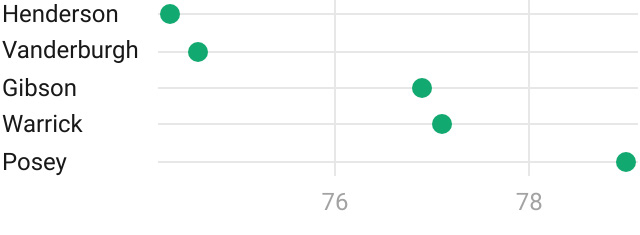
- The region has a higher life expectancy (76.4 years) than Indiana (75.6 years). However, life expectancy varies from county to county, ranging from 74.3 in Henderson County to 79 years in Posey County.
- Heart disease is the leading cause of death in the region and is on the rise.
- One in four adults in the region has been diagnosed with depression at some point.
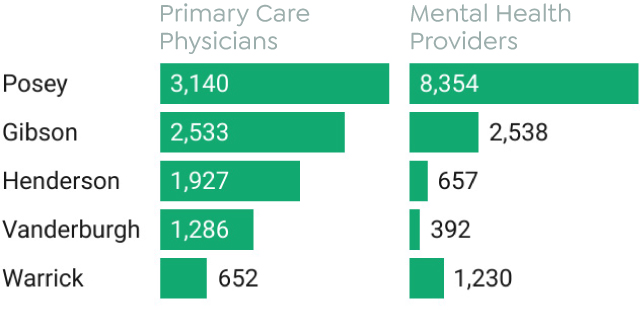
- Rural Posey County has the fewest healthcare providers per resident, with one primary care physician for every 3,140 people and one mental health provider for every 8,354 residents.
Where you live matters
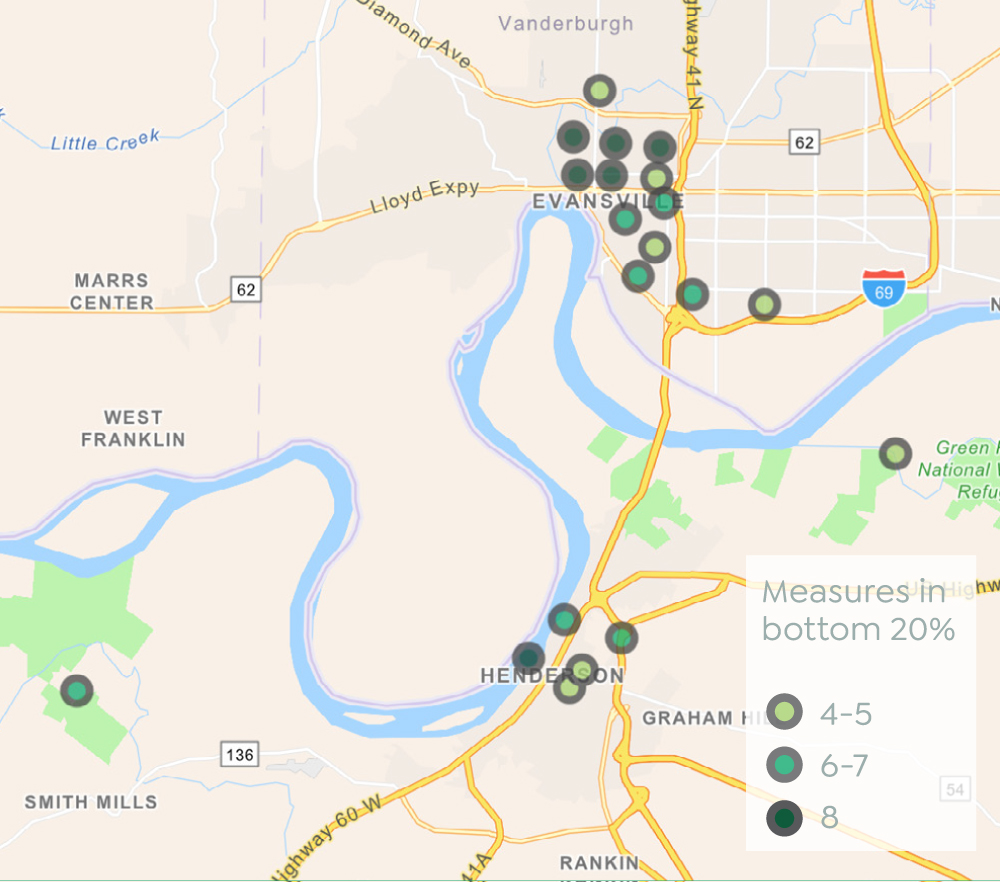
These areas ranked in the bottom 20% for at least four of the following statistics and conditions: heart disease, diabetes, cancer, stroke, depression, poor physical health, poor mental health, and rates of disability. The neighborhoods of Downtown Henderson, CHAIN, STAR, Jacobsville, and Business 41 have high rates for all these indicators.
Life Expectancy
Life expectancy is one of the key indicators of population health and well-being. Life expectancy influences planning for future healthcare needs, the aging population, public health initiatives, social security systems, and retirement planning.1 The region has a slightly higher life expectancy (76.4 years) than Indiana (75.6 years). However, life expectancy in the area varies between counties, ranging from 74.3 years in Henderson County to 79 years in Posey County. Vanderburgh has the second lowest life expectancy (74.6 years).
Henderson and Vanderburgh Counties have lowest life expectancy
Years of life expectancy at birth by county
Source: Polis Center analysis of data from National
Center for Health Statistics – Natality and Mortality
Files; Census Population Estimates Program, 2019-2021
Mortality
The health and well-being of communities have a connection to socio-economic and environmental factors. Health is influenced by socio-economic, behavioral, and biological factors, including living conditions, health outcomes, and health behaviors. While several health outcomes can affect healthcare prioritization and resource allocation, we are focusing on the leading causes of death.2
Heart disease is the leading cause of death in the Greater Evansville Region, just as it is in the United States. The mortality rate from heart disease has been increasing in recent years. For example, in 2020, the mortality rate from heart disease was 260 (per 100,000), which increased to 273 in 2022. Cancer is the second leading of death in the region. However, the rate has decreased slightly in recent years. The mortality rate of the region is also affected by COVID-19, which ranked as the third highest cause of death in 2020 and 2021. It fell to the fifth leading cause of death in 2022. The mortality rate from respiratory diseases and stroke remains constant, while Alzheimer’s declined after 2020.
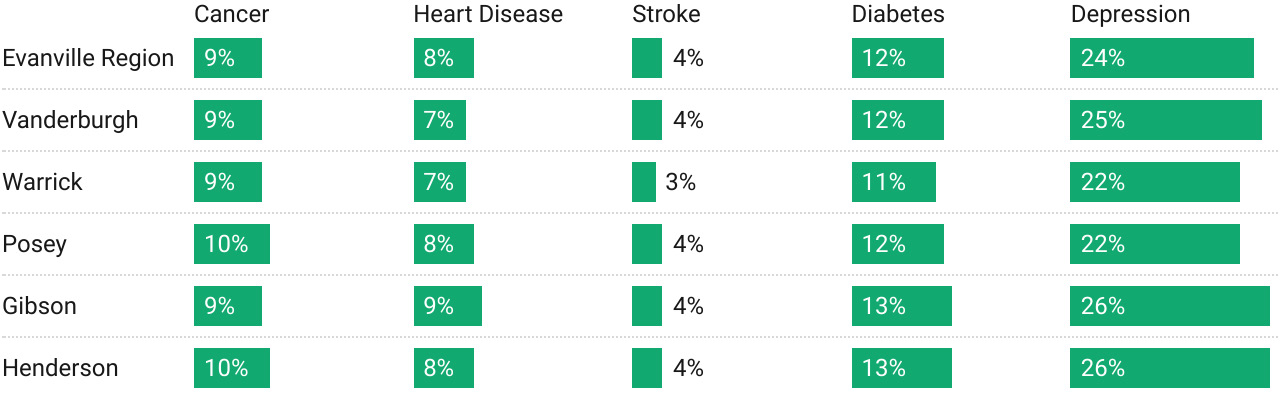
While the region’s mortality rate is highest for cancer, heart disease, and stroke, the prevalence rate is highest for diabetes and depression. Nearly 24% of adults have been diagnosed at some point with depression and 12% with diabetes. Henderson County ranked highest in both diseases, and Warrick County ranked lowest. Depression is one of the more common health disorders and can lead to other adverse outcomes, including cardiovascular disease and premature mortality.3 Diabetes is ranked as one of the top chronic diseases and contributes to other complications such as stroke, kidney, and heart disease.4
Heart disease is leading cause of death, COVID-19 was still leading cause in 2022
Top causes of death in five-county region, crude rate
per 100,000

Source: CDC Places
Prevalence rates are similar across counties for these selected conditions
Percent of adults who, when surveyed, say they have been diagnosed with these conditions at some point
Source: CDC Places
Physical and Mental Health
Physical and mental health are vital in shaping individual quality of life. Good physical health supports a higher energy level and may reduce the risk of serious illness. On the other hand, poor physical health may hinder mobility, restrict freedom, and limit independence. Poor mental health can influence cognitive abilities and affect the ability to maintain healthy relationships.5
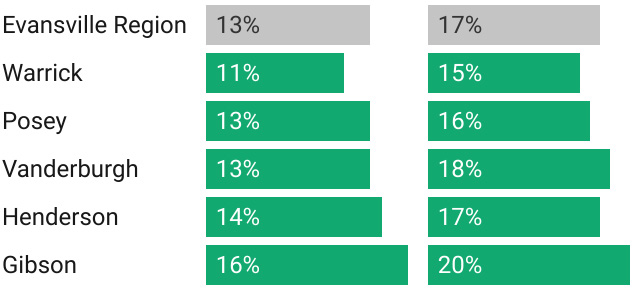
Data from CDC Places indicates that around 17% of adults suffer from more than 14 poor mental health days per month, and 13% of adults suffer from more than 14 poor physical health days per month. (Gibson County ranked highest in both cases, and Warrick ranked lowest.
Warrick County has the lowest rates of poor mental health and poor physical health days per month
Percentage of adults with more than 14 poor mental health days or poor physical health days per month
Source: CDC Places (2022)
Map: Places Where Mental and Physical Health are Worst
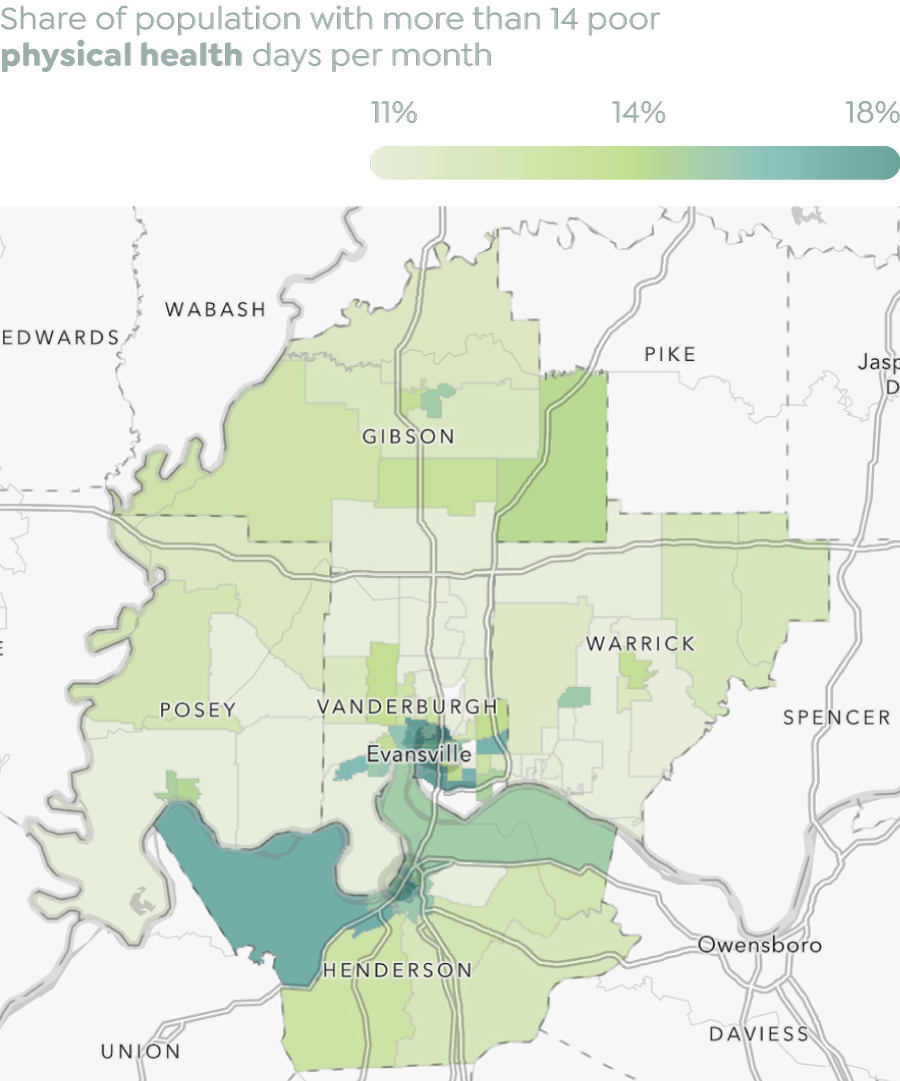
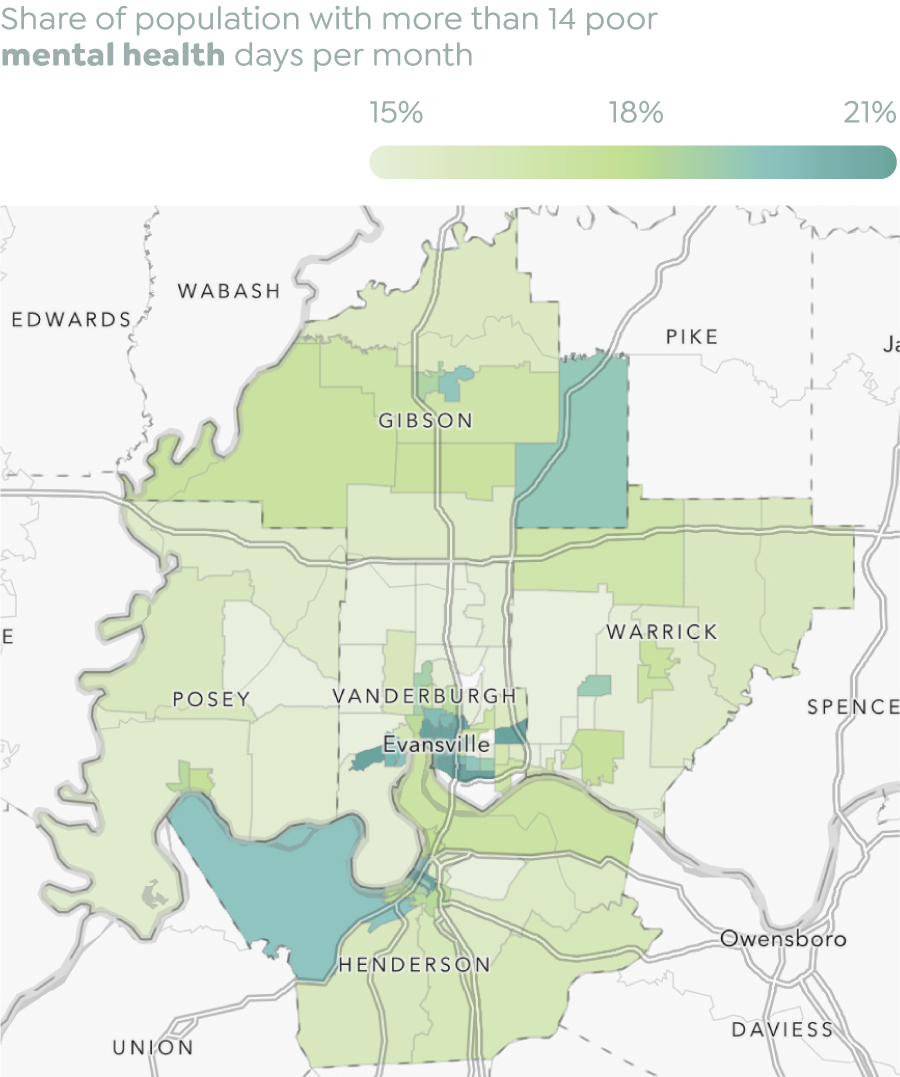
Source: CDC Places
Disability
In the American Community Survey (ACS),6 disability is divided into six categories: ambulatory, cognitive, hearing, independent living difficulty, self-care disability, and vision. Ambulatory difficulty refers to difficulties related to walking and climbing stairs. Difficulty in concentration, remembering, or decision-making refers to a cognitive disability, and difficulty in personal care activities such as bathing or dressing is categorized as a self-care disability. Difficulty in hearing or deafness is described as a hearing disability, and difficulty in seeing is referred to as a vision disability. Independent Map: Places Where Mental and Physical Health are Worst Share of population with more than 14 poor physical health days per month Share of population with more than 14 poor mental health days per month Source: CDC Places 18% 21% 45% 45% 11% 14% 15% 18% 5 living disability is defined as difficulty in doing errands alone, including visiting a doctor’s office or shopping, because of physical, mental, and emotional conditions.
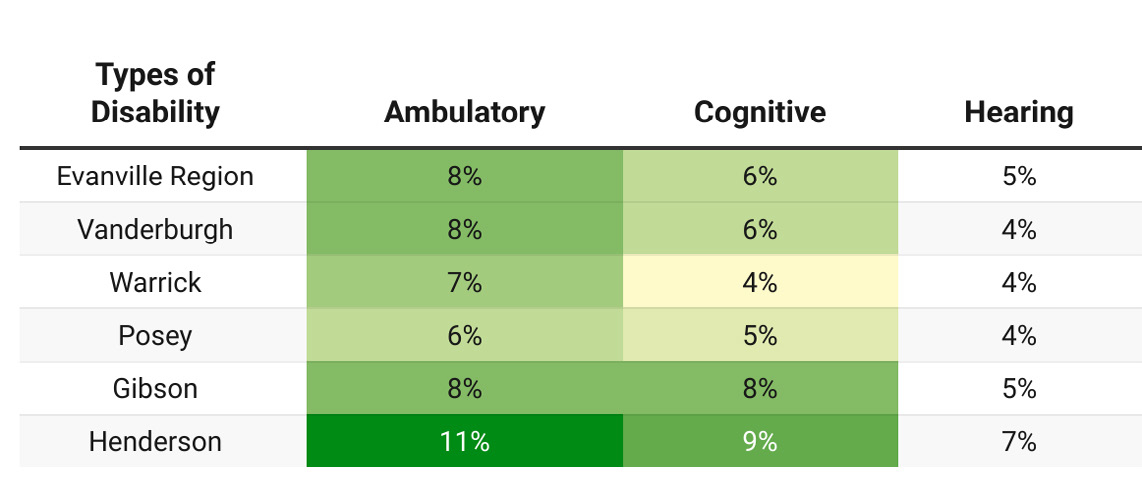
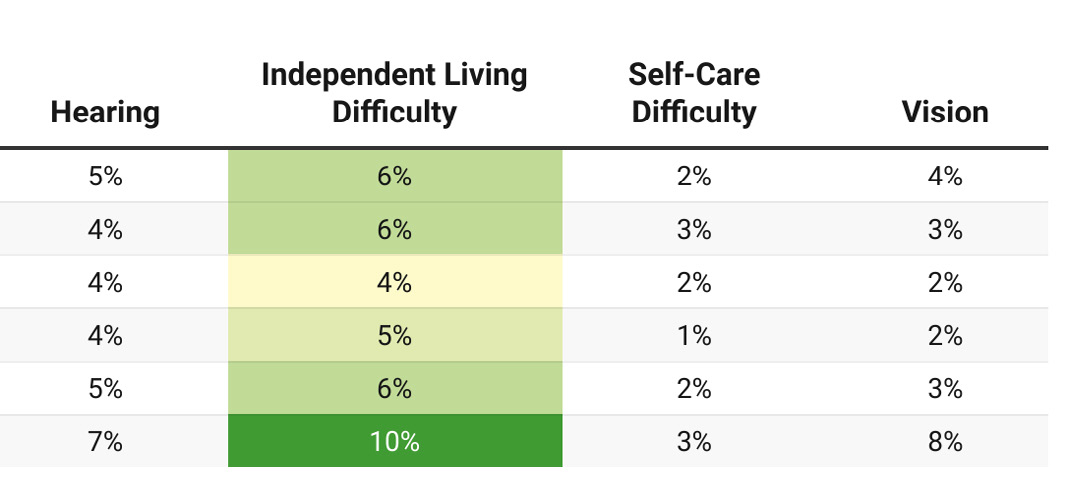
Ambulatory is the highest-ranked disability in the region, as 8% of adults suffer from this, followed by cognitive (6%) and independent living difficulty (6%). Henderson County has the highest percentage of those three types of disabilities. The median age of Henderson County is 41.2 years, which is higher than that of the United States (38.1 years). In addition, nearly 19 percent of the population is 65 years and older. As disability rates tend to increase with age,7 the demographic characteristics of Henderson County may have contributed to the higher disability rates in the area.
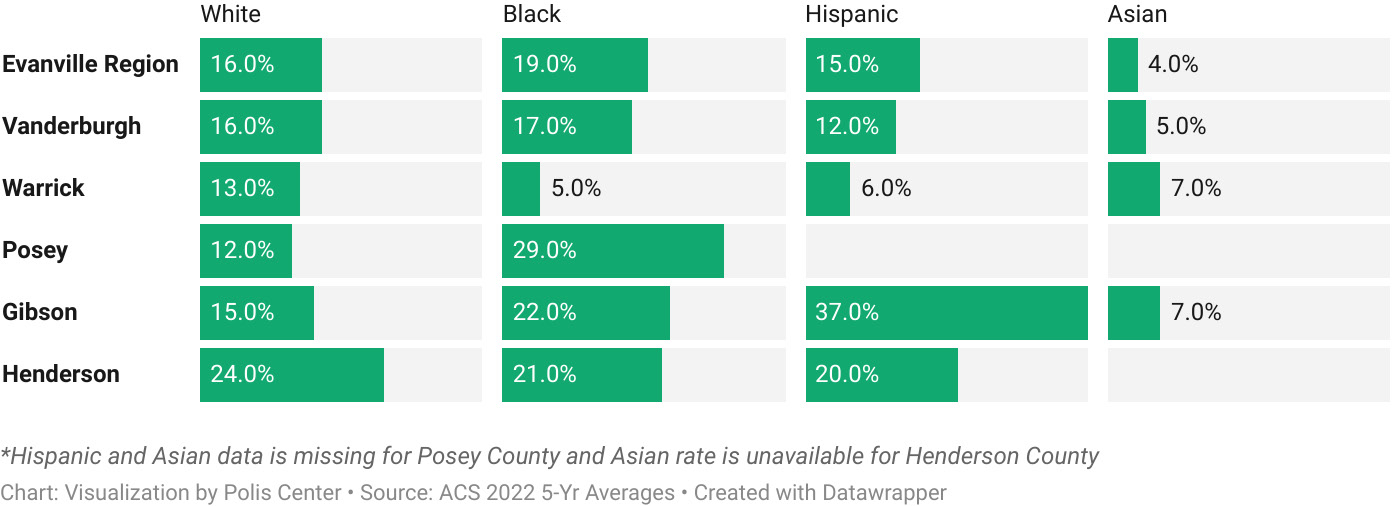
We compare the disability rate by age group. We found that seniors (65+) ranked highest in all six disabilities. Racial disparities were visible in the disability rate as a higher percentage of Black adults (19%) had at least one of the six disabilities compared to Whites (16%) and Hispanics (15%).
Disability rates by type of disability and county
Racial disparities exist in rates of disability
Share of population with a disability by race, ethnicity, and county
Medicaid
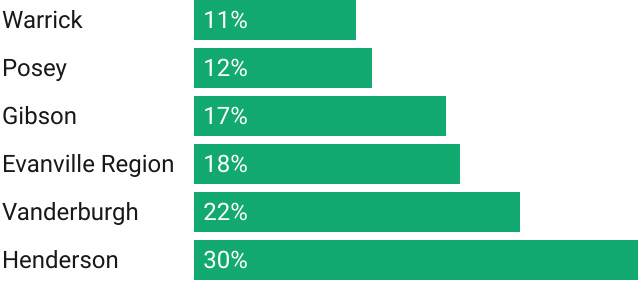
Medicaid is a dual federal and state program that offers medical coverage to low-income individuals and families. Enrollment in Medicaid is divided into four groups: children, adults under age 65 years, seniors (age 65+), and disabled persons.8 In the Evansville region, 18% of the population received Medicaid benefits. The rate is higher in Henderson County (30%) and lowest in Warrick County (11%). Vanderburgh County has the region’s second-highest (22%) Medicaid-enrolled population. Factors such as age, disability, and high poverty rates contribute to the higher Medicaid population in those two Counties. For example, Henderson County has the lowest median household income ($55,530) and the highest poverty rate (17%).
Nearly one third of Henderson County residents are on Medicaid and one fifth of Vanderburgh County
Share of population receiving Medicaid
Source: Polis Center analysis of data from Centers for
Medicare & Medicaid Services, 2022
Access to Healthcare
Primary Care Physician Ratio (PCP Ratio) and Mental Health Provider Ratio (MHP Ratio) are commonly used metrics to explore healthcare access9. PCP ratio indicates how available primary healthcare services are, and MHP ratio measures the number of mental health providers such as physiologists and social workers. A lower ratio (e.g., 500:1) represents better access to those services, while a higher ratio (e.g., 5000:1) suggests fewer providers and limited access.
Posey County has the highest primary care physician and mental health provider ratios in the region. For every 3,140 residents, there is only one primary care physician, and for every 8,354 residents, there is only one mental health provider. Warrick County has the lowest physician ratio, and Vanderburgh County has the highest mental health provider rate.
Rural counties have fewer healthcare providers and much higher ratio of patients per provider
Residents per healthcare provider
Source: CMS, National Provider Identification, 2023
and Area Health Resource File/American Medical
Association, 2021
Low Birthweight
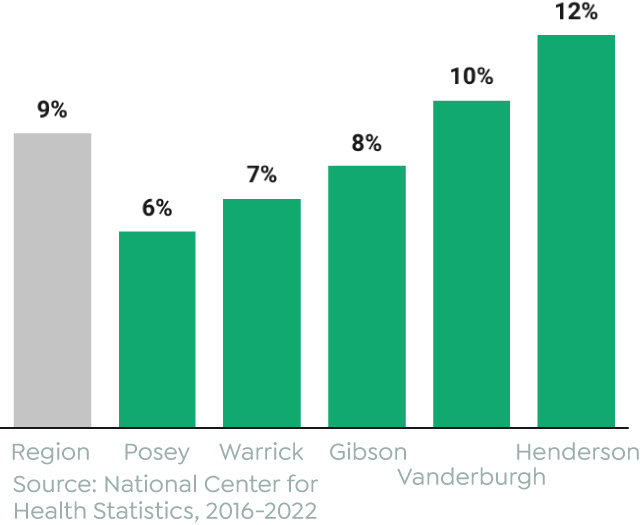
Low birth weight is an important indicator of maternal health, nutritional status, and healthcare access.10 Babies born with low birth weight have a higher risk of dying compared to normal birth weight babies and are often linked with other health issues later in life, including diabetes, cardiovascular disease, and neurodevelopment issues.11 Data from the National Center for Health Statistics (2023) shows that nearly 9% were born in the Greater Evansville Region are associated with low birth weight (less than 5.5 pounds). The rate is highest in Henderson County (12%) and lowest in Posey (6%). Vanderburgh County has the second highest (10%), followed by Gibson (8%).
More than one in ten babies born in Vanderburgh and Henderson counties have a low birth weight
Percent of live births with low birth weight
Early Prenatal Care
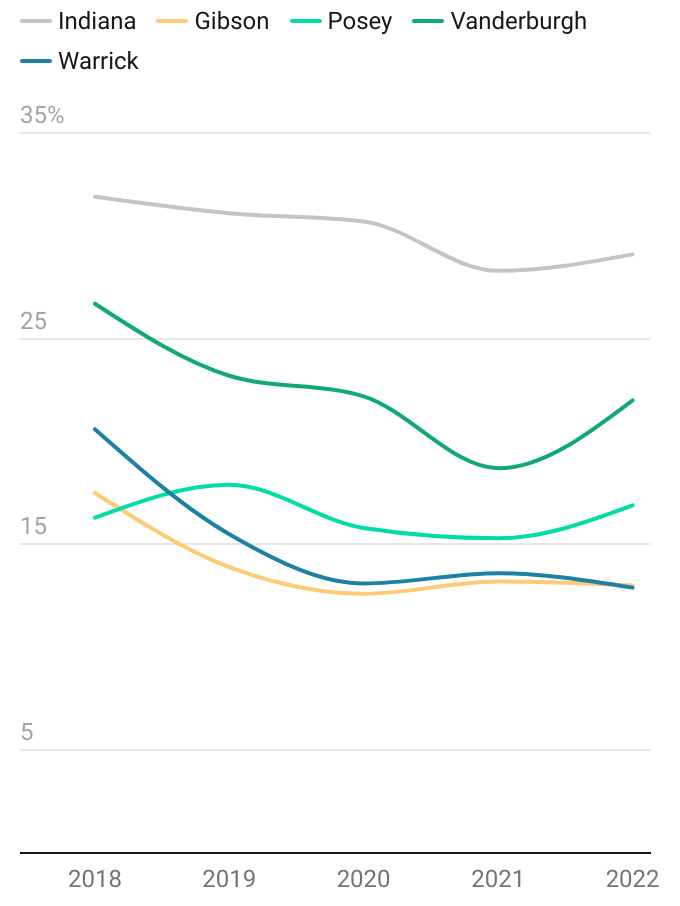
Prenatal care allows healthcare providers to monitor the health of the mother and baby, examine potential problems, and take necessary steps to ensure a healthy pregnancy and delivery. Pregnant women should have access to prenatal services as they become aware of the pregnancy, especially in the first three months. The Greater Evansville Region maintains a better rate of prenatal care than the Indiana State average between 2018-2022. The region benefits from facilities such as Ascension St. Vincent Evansville, which provides extensive maternal-fetal medicine, neonatal intensive care, and certified nurse-midwifery services. Local health initiatives like “My Healthy Baby” also connect pregnant women to support services, including personalized guidance during and after pregnancy. These programs are part of Indiana’s broader efforts to improve maternal and child health outcomes through increased funding and partnerships with community organizations.12
Although the Greater Evansville Region has higher prenatal care in the first trimester than the state, the rate of lack of prenatal care varies from Vanderburgh (22%) to Warrick (13%). The rate slightly improved in 2020; however, a slight decrease was observed in 2022. The existing racial breakdown of lack of prenatal care for Vanderburgh County also exhibited disparities as both Black (32%) and Hispanic (31%) women have a higher rate compared to white (18%) women. While rates by race are unavailable for other counties due to data suppression, future studies should examine the existing racial disparities to offer a more comprehensive overview.
Regional counties have a better rate of early prenatal care than the state average
Percent of women without prenatal care in the first
trimester
Source: Indiana Department of Health
Notes
- National Academies of Sciences, Division on Engineering, Physical Sciences, Board on Mathematical Sciences, Their Applications, Committee on Population, & Committee on the Long-Run Macroeconomic Effects of the Aging US Population- -Phase II. (2015). The growing gap in life expectancy by income: Implications for federal programs and policy responses.
- National Center for Health Statistics. (2022). Leading Causes of Deaths. https://www.cdc.gov/nchs/fastats/leading-causesof- death.htm
- Hare DL, Toukhsati SR, Johansson P, Jaarsma T. Depression and cardiovascular disease: a clinical review. European heart journal. 2014 Jun 1;35(21):1365-72.
- Siromani JD. The impacts of different stages of chronic kidney disease, as well as the co-morbidities of diabetes and heart disease, on patients’ quality of life (Doctoral dissertation, Memorial University of Newfoundland).
- Marin MF, Lord C, Andrews J, Juster RP, Sindi S, Arsenault- Lapierre G, Fiocco AJ, Lupien SJ. Chronic stress, cognitive functioning and mental health. Neurobiology of learning and memory. 2011 Nov 1;96(4):583-95.
- Altman BM, Madans J, Weeks JD. An evaluation of the American Community Survey indicators of disability. Disability and health journal. 2017 Oct 1;10(4):485-91.
- Berlau DJ, Corrada MM, Kawas C. The prevalence of disability in the oldest-old is high and continues to increase with age: findings from The 90+ Study. International Journal of Geriatric Psychiatry. 2009 Nov;24(11):1217-25.
- Colello KJ, Morton WR. Medicaid eligibility: older adults and individuals with disabilities. Washington, DC: Congressional Research Service. 2019 Dec 1.
- Kroenke K, Unutzer J. Closing the false divide: sustainable approaches to integrating mental health services into primary care. Journal of general internal medicine. 2017 Apr;32(4):404- 10
- WHO (2024), https://www.who.int/data/nutrition/nlis/info/ low-birth-weight.
- Cutland et al. Low birth weight: Case definition & guidelines for data collection, analysis, and presentation of maternal immunization safety data. (2017) https://pmc.ncbi.nlm. nih.gov/articles/PMC5710991/#:~:text=Low%20birth%20 weight%20is%20a%20valuable%20public%20health%20 indicator%20of,14%5D%2C%20%5B15%5D.
- My Healthy Baby, https://www.in.gov/myhealthybaby/for-thepublic/.
Where You Live Matters is a product of Grow
in partnership with The Polis Center.
Guide